
What is the Phuket Vegetarian Festival?
Phuket Vegetarian Festival is a nine-day Taoist spiritual celebration held annually in October during the ninth lunar month of the Chinese calendar, honouring the Nine Emperor Gods through firewalking ceremonies, elaborate street processions, and the ancient practice of spirit mediumship. Known in Thai as Tesagan Gin Je (เทศกาลกินเจ), it is one of Southeast Asia's most visually spectacular and spiritually significant cultural events — simultaneously a religious observance, a community gathering, and a sensory spectacle that transforms the entire island of Phuket for nine days. Updated May 2026.
The phuket vegetarian festival traces its origins to 1825 in Kathu District, Phuket. According to the Wikipedia documentation of the Nine Emperor Gods Festival, a Chinese opera troupe performing near a local tin mine fell seriously ill. The group adopted a strict vegetarian diet, prayed intensively to the Nine Emperor Gods, and abstained from alcohol and sexual activity for purification. They recovered. The local Hokkien Chinese community adopted this practice, and the annual observance has continued without interruption every year since. In 2025, Kathu Shrine — considered the birthplace of the phuket vegetarian festival — marked its 200th consecutive year of celebration.
Today the phuket vegetarian festival draws over 50,000 visitors during its nine days, per the Tourism Authority of Thailand (2026). More than 40 Chinese shrines across Phuket participate simultaneously. The four most ceremonially significant are Jui Tui Shrine in Phuket Old Town (the festival's main ceremonial centre), Bang Neow Shrine (one of the island's oldest), Kathu Shrine (the historic birthplace site), and Tha Rua Shrine in Thalang District. Street processions connecting these shrines are the festival's defining public spectacle — deafening with firecrackers, thick with incense smoke, and dense with thousands of white-clad devotees moving through Phuket's narrow Old Town streets.
"The phuket vegetarian festival is the one week each year when the whole island changes frequency. The shrines roar with firecrackers, the air smells of incense, and every restaurant near Old Town becomes a vegetarian kitchen. You don't observe this festival — you're absorbed into it." — Nico Voss, local events editor at EVE Phuket
The Nine Emperor Gods are celestial deities in Taoist belief — Star Lords associated with the Big Dipper constellation, believed to govern human fate, fortune, and health. During the festival, devotees invite these gods to descend and purify the community. Participants wear white or yellow to symbolise spiritual purity and observe ten principles throughout the nine days: abstaining from meat, dairy, eggs, alcohol, and the five pungent herbs (garlic, onion, chives, leeks, and wild leeks). For the full nine days, the phuket vegetarian festival transforms every participating household and business into a zone of ritual cleanliness.
When we visited the Jui Tui Shrine during the opening ceremony, the Go Teng pole — a tall bamboo pole raised at midnight to invite the Nine Emperor Gods to descend — went up to a wall of firecrackers and the sustained chanting of hundreds of white-clad devotees. In our experience, no description adequately prepares you for the sensory reality of this moment. Arrive for the opening ceremony if you want the single most atmospheric event the phuket vegetarian festival produces each year.
What to Expect
The phuket vegetarian festival unfolds over nine days in a structured escalation — early days are quiet and devotional, middle days build with processions and rituals, and the final days culminate in the most intense firewalking and spirit medium ceremonies of the annual calendar. From a visitor's perspective, three distinct experiences define the festival: the daily street processions, the ma song spirit medium rituals, and the transformation of Phuket Old Town into one of Thailand's most vibrant vegetarian food districts.
The Street Processions
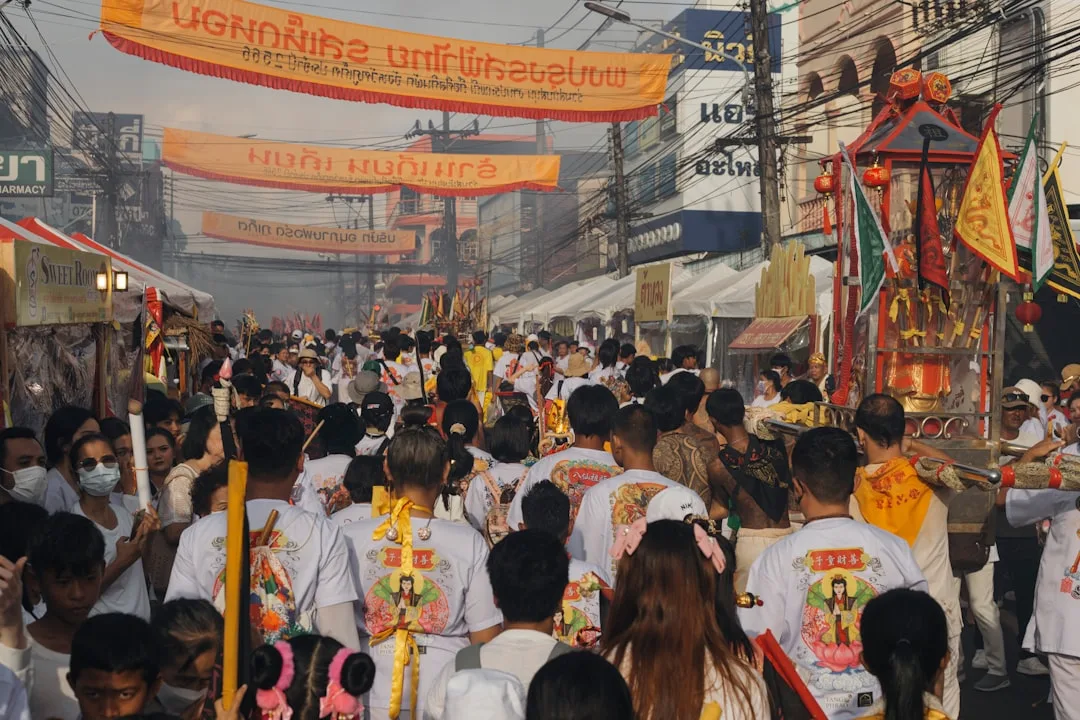
Daily processions move through Phuket Old Town and the surrounding streets, departing from each participating shrine at dawn. White-clad participants carry offerings, banners, and ceremonial objects. Firecrackers are continuous — the smoke is thick, the noise is physically overwhelming at close range, and the streets are carpeted in red paper casings by mid-morning. Local businesses along the procession routes set up offering tables in front of their shophouses. According to the Tourism Authority of Thailand's cultural overview of the festival, morning processions begin as early as 5 AM at some shrines and extend into midday.
The Ma Song: Spirit Mediums and Ritual Mortification
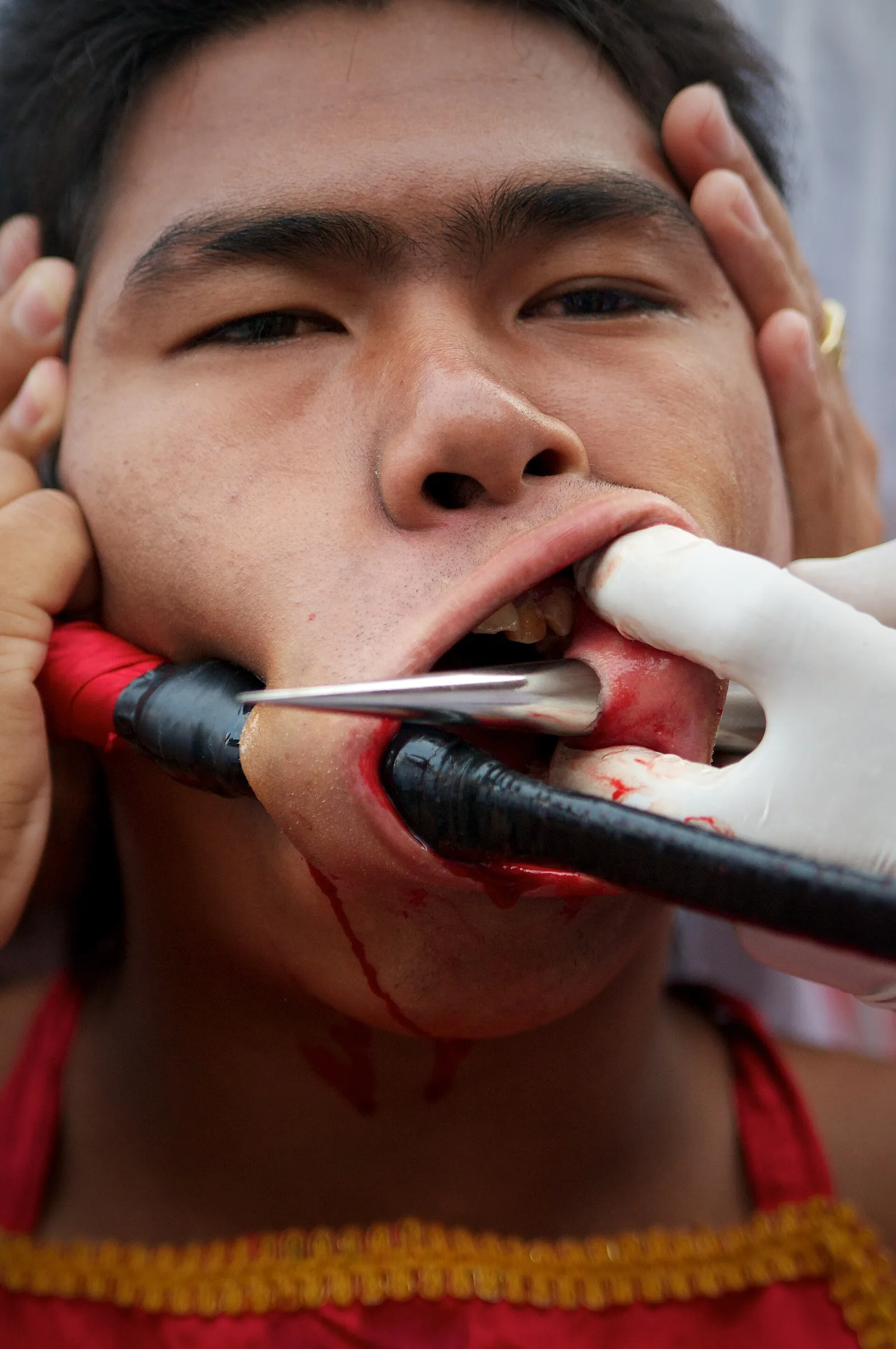
The ma song are the defining visual spectacle of the phuket vegetarian festival. These are individuals believed to be possessed by Chinese deities — spirit mediums who enter trance states and undergo ritual self-mortification as acts of devotion and community protection. While in a trance state, they pierce their cheeks, tongues, and other body parts with metal skewers, swords, and elaborate implements. They walk across beds of burning coals. They climb ladders made of bladed rungs. These rituals are not performances staged for tourists — they are sincere religious acts the community believes absorb collective misfortune and bring protection for the coming year.
I noticed during the firewalking ceremonies at Kathu Shrine that the ma song show no visible pain response. Blood is minimal. After the ceremonies, participants receive treatment at the shrine and return to their daily activities. The practice is documented in the anthropological literature as an example of religious trance inducing genuinely altered pain perception — not a trick, not theatre.
Daily Schedule at a Glance — 2026 Phuket Vegetarian Festival
| Day | Key Events | Best Location | Ideal Viewing Time |
|---|---|---|---|
| Day 1 (Oct 10) | Go Teng pole raising, opening ceremony, first procession | Jui Tui Shrine | Midnight–2 AM (pole), 6–9 AM (ceremony) |
| Days 2–4 (Oct 11–13) | Daily processions, food markets, temple ceremonies | All major shrines, Ranong Road | 7–10 AM (processions), 5–8 PM (food stalls) |
| Days 5–7 (Oct 14–16) | Peak ma song rituals, firewalking, body piercing ceremonies | Kathu Shrine, Jui Tui Shrine | 9 AM–12 PM (peak rituals) |
| Days 8–9 (Oct 17–18) | Grand finale processions, farewell ceremony at the sea | Kio Thian Keng Shrine, Saphan Hin | 6–9 PM (farewell ceremony) |
The Jay Food Markets: What to Eat
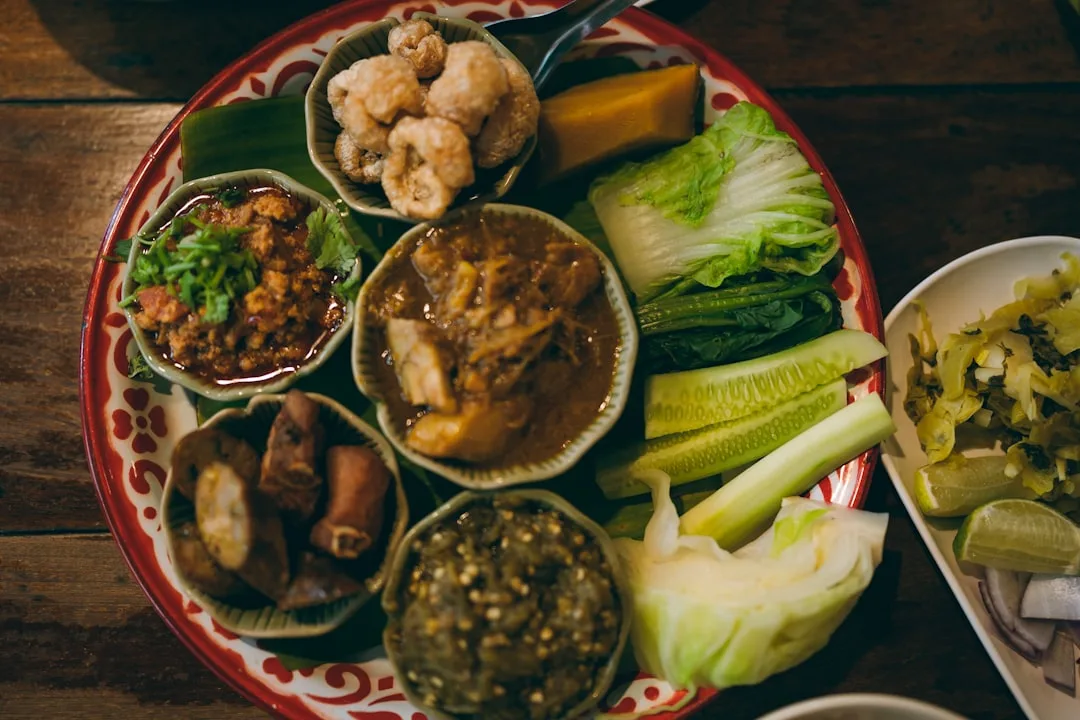
The food transformation during the phuket vegetarian festival is remarkable. Hundreds of food stalls line Ranong Road from the main fresh market all the way to the Jui Tui Shrine entrance. Look for the bright yellow flags displaying the red เจ character — every stall flying one sells jay food: strictly vegan, no meat, no dairy, no eggs, and none of the five pungent herbs. Must-try dishes include Mee Pad Jay (stir-fried flat rice noodles with vegetables), Por Pia Tod Jay (golden deep-fried spring rolls), Yen Ta Fo (the distinctive pink noodle soup with sweet-savoury tomato-bean broth), and kanom see ka — Phuket's version of Chinese crullers, best found fresh before 8 AM from morning-only stalls. Michelin-recommended restaurants in Phuket Old Town, including One Chun and Khao Tom Thanon Di Buk, also adapt their menus for the festival period.
Photography and Spectator Safety
Photography of the processions and street scenes is welcomed during the phuket vegetarian festival — you'll be surrounded by fellow photographers throughout. For the ma song rituals, maintain a respectful distance and check guidance at each individual shrine, as some restrict photography during specific ceremonies. Ear protection is strongly recommended: the firecracker volume during peak processions is comparable to industrial noise at close range and lasts for extended periods. Disposable foam earplugs are available at every pharmacy in Phuket Old Town for around 10–20 THB. A basic cotton mask provides genuine protection from firecracker smoke and heavy incense, both of which are dense throughout the festival zone.
Insider Tips from Locals
The difference between watching the phuket vegetarian festival as a passive tourist and experiencing it as a genuine participant comes down to preparation, timing, and knowing which details the standard guides skip. We've covered this festival across multiple years, and these are the tips that consistently change the experience.
- Arrive before dawn for the morning processions. The peak energy of the phuket vegetarian festival's street processions happens between 6 AM and 9 AM. Most visitors don't emerge until 9 or 10 AM and miss the most atmospheric window entirely. Set an alarm. The air is cool, the incense smoke is heavy, and the processions move at their most unobstructed pace before the tourist crowds arrive.
- Stay in Phuket Old Town, not on the beach. The festival is entirely centred on the shrines of the old Chinese quarter. Staying at a Sino-Portuguese shophouse guesthouse on Thalang Road or Dibuk Road puts you within walking distance of Jui Tui Shrine, Bang Neow Shrine, and the main food markets. Staying in Patong or Karon means a 30–40 minute taxi ride each time — you'll miss the spontaneous moments between scheduled events.
- Wear clothes you're willing to wash thoroughly. The firecracker smoke and incense from the phuket vegetarian festival penetrate everything. White clothing, if you choose to wear it as local participants do, will need proper washing. Closed-toe shoes are a practical necessity — the streets are covered in firecracker casings and wet from continuous street cleaning between processions.
- Eat breakfast before 8 AM for the best food selection. The most popular street food stalls near Jui Tui Shrine sell out of fresh items — particularly kanom see ka and fresh tofu dishes — by 8:30 AM on peak days. We recommend buying a simple breakfast from the vendors the moment you arrive, before moving to observe the first procession. The afternoon food market is larger and runs until 8–9 PM, but morning stalls have the freshest items by far.
- Carry earplugs and a respiratory mask. The firecracker smoke during peak processions at the phuket vegetarian festival is dense enough to affect sensitive lungs over extended exposure. A basic cotton mask or travel mask provides genuine protection. Many local devotees wear them throughout the nine days. The incense is also heavy throughout Old Town — pleasant at moderate levels, overwhelming at shrine entrances during peak ceremonies.
- Book accommodation at least 6 weeks in advance for the 2026 festival. Phuket Old Town guesthouses and boutique hotels fill completely during the phuket vegetarian festival. As of May 2026, popular properties in the Old Town area begin booking out as early as August for October dates. Mid-range beach hotels in Patong and Karon remain available longer, but the commute makes multi-day festival attendance significantly harder.
- Respect the sacred — ask before photographing individuals. The devotees at the phuket vegetarian festival are engaged in genuine spiritual practice. Photographing the ma song during their preparation or recovery periods without permission crosses a clear cultural line. During the open public processions and shrine ceremonies, photography is generally accepted — use your judgment about whether you're documenting something made public or intruding on something private.
- Plan your shrine circuit before Day 1. The four major shrines — Jui Tui Shrine, Bang Neow Shrine, Kathu Shrine, and Tha Rua Shrine — each have distinct schedules and atmospheres. Jui Tui is most accessible for first-time visitors. Kathu Shrine has the most intense ma song rituals. Tha Rua in Thalang District is the most serene and least crowded. Kio Thian Keng Shrine at Saphan Hin is the site of the deeply moving final farewell ceremony.
For broader context on visiting Phuket's cultural sites, our complete guide to things to do in Phuket covers temple visits, cultural activities, and day-trip options year-round. The Phuket night markets guide is particularly relevant — the Old Town market scene that concentrates during the phuket vegetarian festival runs in a reduced form year-round and is worth visiting even outside festival dates.
Practical Info & Costs
The phuket vegetarian festival 2026 runs from 10 to 18 October — nine consecutive days beginning on the eve of the ninth lunar month of the Chinese calendar. All ceremonies and processions are free to attend. Here is everything you need to plan your visit: dates, costs, where to stay, and how to move around during the festival period. All prices are accurate as of May 2026.
Key Festival Facts at a Glance
| Detail | Information |
|---|---|
| Festival dates 2026 | 10–18 October (9 days) |
| Thai name | Tesagan Gin Je (เทศกาลกินเจ) |
| Main location | Phuket Old Town (Talat Yai) and 40+ shrines across Phuket |
| Primary shrine | Jui Tui Shrine, Ranong Road, Phuket Town |
| Birthplace shrine | Kathu Shrine, Kathu District |
| Entry cost | Free (all shrine ceremonies and processions) |
| Street food cost | 30–80 THB per dish |
| Best days to visit | Days 5–7 (peak ma song rituals); Day 1 (opening ceremony) |
| Estimated annual visitors | 50,000+ (Tourism Authority of Thailand, 2026) |
What Does Attending the Phuket Vegetarian Festival Cost?
The phuket vegetarian festival itself is entirely free to attend. All shrine ceremonies, street processions, and public ritual events are open to everyone at no charge. Your costs are accommodation, transport, and food. Street food at the stalls lining Ranong Road runs 30–80 THB per dish — among the most affordable eating on the island at any time of year. A full meal of three dishes with a drink costs approximately 150–250 THB per person. According to the Nine Emperor Gods Festival Wikipedia entry, Thailand's festival economy generated an estimated 44.6 billion baht in revenue in 2023 — the highest in a decade — representing a 5.5% increase from 2022.
Where to Stay During the Festival
Old Town guesthouses and boutique hotels book out months in advance for the phuket vegetarian festival. We recommend these accommodation zones in order of proximity to festival events:
- Phuket Old Town (Thalang Road, Dibuk Road, Krabi Road): Walking distance to all major shrines. Best for multi-day festival attendance. Book by August 2026 at the latest.
- Phuket Town outskirts (Bang Yai, Kohkaew): 10–15 minute Grab ride to Old Town. More accommodation availability at lower prices than the Old Town itself.
- Patong Beach hotels: Best avoided for multi-day festival attendance — the 30–45 minute commute each way compounds quickly. Reasonable base for a single-day visit combined with beach time. See our Patong Beach guide for accommodation options in that area.
Getting There and Around
The phuket vegetarian festival is centred on Phuket Old Town, approximately 30–40 minutes from Phuket International Airport by Grab (450–600 THB as of May 2026). During the festival, Ranong Road and surrounding streets close to vehicles during morning procession hours (approximately 6–10 AM daily). Use Grab to the edge of the pedestrian zone and walk in from there. For moving between shrines — particularly Kathu Shrine, which is in a separate district roughly 15 minutes from Old Town — a hired vehicle or Grab is necessary. Between festival events, Phuket's beach clubs and coastal attractions remain fully operational; October's lower tourist numbers mean better availability and lower prices across the board. For nightlife context during your stay, the Phuket nightlife guide covers what runs parallel to the festival programming.
Frequently Asked Questions
When is the Phuket Vegetarian Festival 2026?
The phuket vegetarian festival 2026 runs from 10 to 18 October — nine days during the ninth lunar month of the Chinese calendar. The opening ceremony (Go Teng pole raising) begins at midnight on 10 October at Jui Tui Shrine in Phuket Old Town. The closing farewell ceremony takes place on 18 October at Kio Thian Keng Shrine at Saphan Hin public park on the waterfront.
Is the Phuket Vegetarian Festival free to attend?
Yes — all ceremonies, processions, and shrine events during the phuket vegetarian festival are open to the public at no charge. Street food at the festival stalls runs 30–80 THB per dish, making this one of the most affordable nine days on the island. Accommodation is the primary cost variable, with Old Town guesthouses booking out months in advance.
What do people eat at the Phuket Vegetarian Festival?
Participants follow the jay diet — strictly vegan, with no meat, dairy, eggs, alcohol, or five pungent herbs (garlic, onion, chives, leeks, wild leeks). Must-try dishes include Mee Pad Jay (stir-fried rice noodles with vegetables), Por Pia Tod Jay (deep-fried spring rolls), Yen Ta Fo (the distinctive pink noodle soup with sweet-savoury broth), and kanom see ka (Chinese crullers, best early morning from specialist stalls). Look for yellow flags displaying the red เจ character — every stall flying one sells guaranteed jay food.
What is a ma song at the Phuket Vegetarian Festival?
A ma song is a spirit medium who participates in the phuket vegetarian festival by entering a religious trance and undergoing ritual self-mortification on behalf of the community. While possessed, the ma song pierces their cheeks, tongue, and other body parts with metal skewers and swords, walks across burning coals, and climbs ladders made of bladed rungs. These acts are believed to absorb collective misfortune and bring protection for the year. The practice is performed without anaesthesia; participants display no visible pain response during the trance state.
What should I wear to the Phuket Vegetarian Festival?
Visitors have no dress code requirements at the phuket vegetarian festival. Local participants wear white or yellow as a symbol of spiritual purity. Practically: closed-toe shoes are essential (streets are covered in firecracker casings), bring clothes you can wash thoroughly afterwards (firecracker smoke penetrates fabric), and carry a simple mask for smoke and incense protection. Avoid wearing red as a visitor — it's not prohibited, but the contrast with the all-white observant crowd can feel culturally inconsiderate.
Which shrine is best for watching the Phuket Vegetarian Festival?
Jui Tui Shrine on Ranong Road is the main ceremonial centre and the best starting point for first-time visitors to the phuket vegetarian festival — it hosts the opening ceremony, the largest processions, and consistent activity throughout all nine days. Kathu Shrine is considered the birthplace and hosts the most intense ma song rituals. Kio Thian Keng Shrine at Saphan Hin is the site of the final farewell ceremony at sea — one of the most emotionally powerful moments of the entire festival.
Is the Phuket Vegetarian Festival safe for tourists?
Yes — the phuket vegetarian festival is safe for tourists. Crowds are large but orderly. The main risks are sensory: firecracker noise can damage hearing at close range without ear protection, and heavy incense and smoke can aggravate respiratory conditions. Maintain distance from active processions, never step into the path of a moving procession, and do not approach ma song during rituals. Tourist Police are present throughout the Old Town festival zone and can be reached at 1155.
How long does the Phuket Vegetarian Festival last?
The phuket vegetarian festival runs for nine consecutive days, from the eve of the ninth lunar month to its ninth day. The 2026 festival runs from 10 to 18 October. Most visitors plan two to three days of attendance to cover the opening ceremony, the peak ritual days (Days 5–7), and the farewell ceremony — a combination that captures the full arc of the event without requiring a nine-day stay.
Can I eat non-vegetarian food during the festival?
Yes — non-jay restaurants operate as normal throughout the phuket vegetarian festival. Beach resort restaurants, hotel dining rooms, and venues outside Phuket Old Town continue serving their standard menus. Within Old Town during festival days, the majority of street stalls switch to jay menus, but non-vegetarian restaurants on side streets remain open. Patong Beach's restaurant strip operates entirely normally throughout the festival period — see our Patong Beach guide for options.
Does the Phuket Vegetarian Festival happen anywhere else in Thailand?
Yes — the vegetarian festival (Tesagan Gin Je) is observed across Thailand, particularly in areas with large Hokkien Chinese communities, including Bangkok, Trang, and Hat Yai. However, the phuket vegetarian festival is the largest and most internationally known, distinguished by the intensity of its ma song rituals and the scale of its 40+ shrine network. According to the Wikipedia entry on the Nine Emperor Gods Festival, the celebration also takes place in Malaysia, Singapore, and Indonesia.