
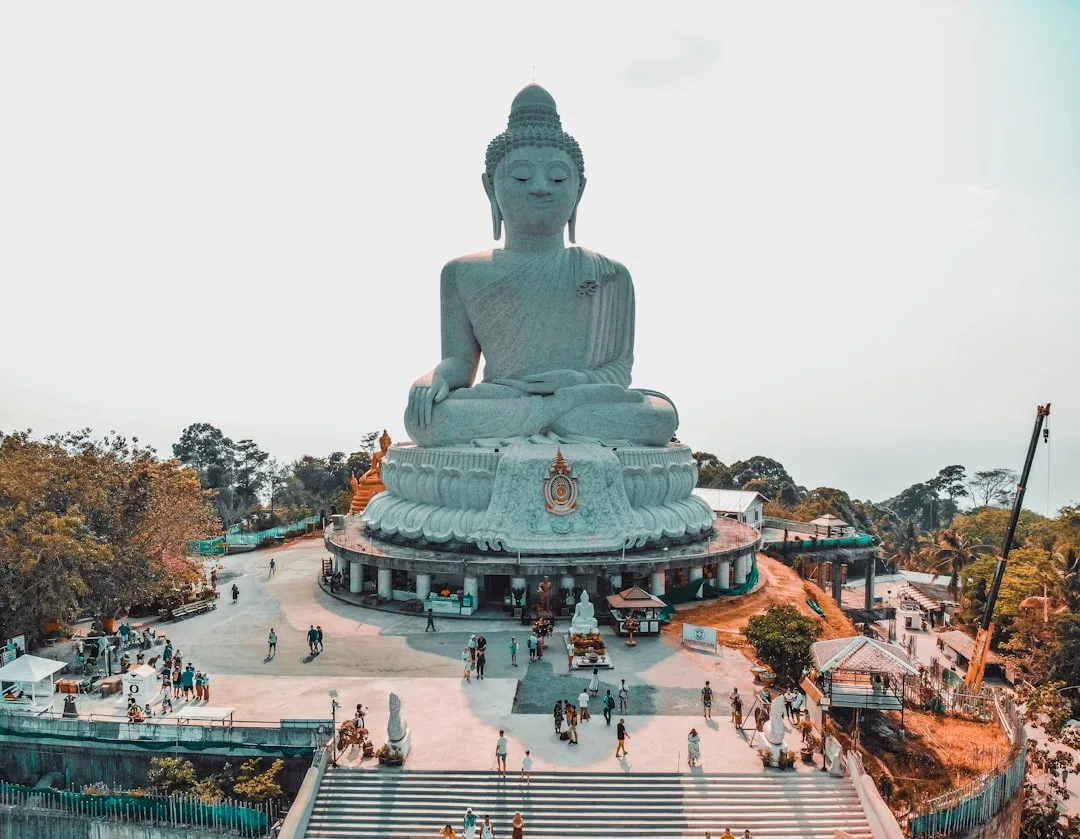
What Is Big Buddha Phuket?
Big Buddha Phuket is a 45-metre white marble Buddhist monument seated atop Nakkerd Hill in southern Phuket, Thailand — one of the island's most iconic landmarks, an active religious site, and freely accessible to all visitors regardless of faith or nationality. Updated May 2026.
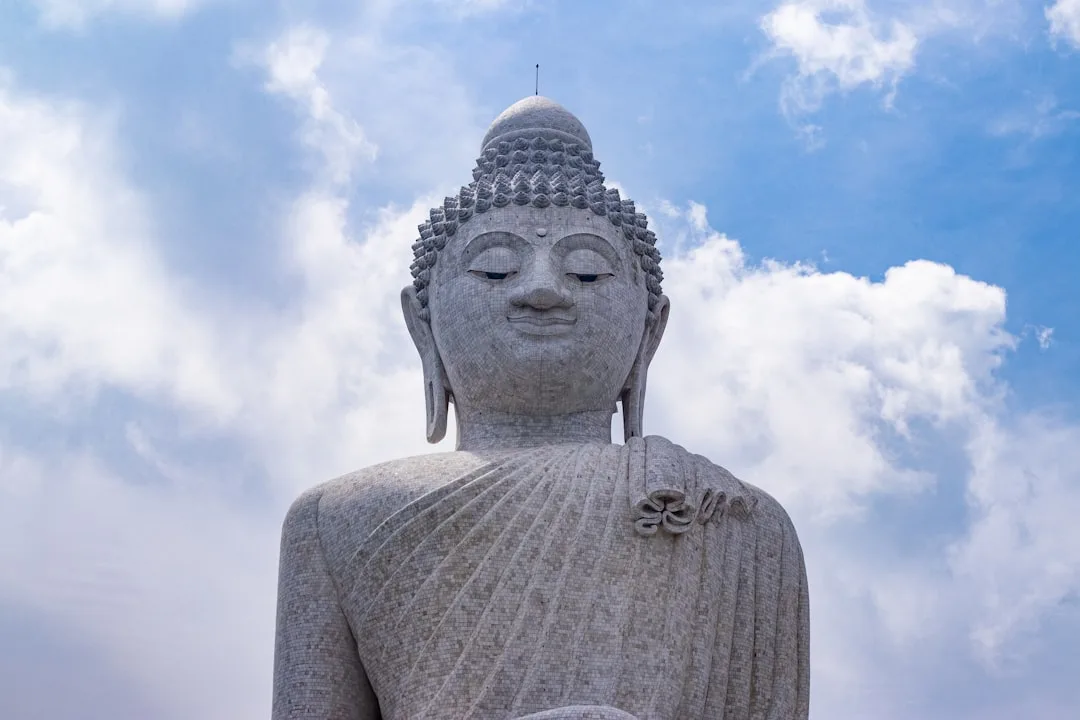
The statue's full official name is Phra Phutta Ming Mongkol Eknakakiri (Thai: พระพุทธมิ่งมงคลเอกนาคคีรี), translating from Pali and Thai as "The Cherished Auspicious Lord Buddha atop Nāga Hill." It is also formally known as Wat Phra Phuttha Ming Mongkhon Akanakkhiri — an active Buddhist temple administered by resident monks. Locally, everyone simply calls it the Big Buddha. At 45 metres tall and 25.45 metres wide, constructed from reinforced concrete and clad in approximately 135 tonnes of Burmese white marble, it ranks as the third-tallest Buddha statue in Thailand behind only the Great Buddha of Thailand in Ang Thong and Luangpho Yai.
The big buddha phuket project began around 2002 and was funded entirely by public and private donations, eventually costing approximately 30 million baht (around US$950,000 at 2019 exchange rates). In 2008, Thailand's Supreme Patriarch officially declared it the "Buddhist Treasure of Phuket." According to the Tourism Authority of Thailand (2025), Big Buddha Phuket ranks among the island's top-visited cultural sites, attracting visitors from across Europe, East Asia, Australia, and the Americas alongside Thai Buddhist pilgrims. The statue sits in the Maravijaya attitude — seated, right hand touching the earth, facing Ao Chalong Bay to the east.
"When we visited on a late Tuesday afternoon, the Big Buddha was almost otherworldly — the white marble turned amber in the fading sunlight, the bay far below going gold, and almost no one else on the upper terrace. It's one of those Phuket moments that doesn't make it into the nightlife guides but stays with you." — Nico Voss, local events editor at EVE Phuket
The site sits at nearly 400 metres above sea level on Mount Nagakerd, positioned between the beaches of Karon and Kata to the west and Ao Chalong Bay to the east, in Karon Subdistrict, Mueang Phuket District. On a clear day the statue is visible from Promthep Cape, the Karon Viewpoint, Chalong Bay, and most elevated points across southern Phuket. The access road runs 6 kilometres from Chaofa West Road, beginning approximately 2 km from Chalong Roundabout.
Important 2026 update: Big Buddha Phuket was closed from August 2024 after a landslide damaged access roads on Nakkerd Hill. The site reopened on 3 March 2026 — Makha Bucha Day — and has been operating continuously since. Per the Thailand Tourism Directory (2026), the temple is listed as an active attraction in Karon Subdistrict. Some mapping applications still incorrectly show the site as "permanently closed" — this is outdated information. Call ahead on 083 556 2242 if conditions are uncertain.
For visitors planning a broader day in southern Phuket, the Big Buddha pairs naturally with nearby Wat Chalong (10 minutes by vehicle, Phuket's most historically significant temple) and Promthep Cape (15 minutes, the island's best sunset viewpoint). Our full guide to things to do in Phuket covers how to build these into a complete itinerary alongside the best beaches in Phuket nearby.
Visit Tips, Dress Code & Opening Hours
Big Buddha Phuket is free to enter and open every day — but the dress code is enforced without exception, and transport logistics require advance planning given the hilltop location. Here is everything confirmed as of May 2026.
| Detail | Information (May 2026) |
|---|---|
| Opening hours | 6:30 AM – 6:30 PM daily (verify on arrival; call 083 556 2242) |
| Admission fee | Free (donations welcome) |
| Parking | Free, large lot below main terrace |
| Recommended visit duration | 60–90 minutes |
| Best time of day | 4:30–5:30 PM (golden light on the white marble) |
| Steps to statue base | 94 (lower terrace accessible by vehicle) |
| Accessibility | Lower temple terrace is vehicle-accessible; 94 steps required for upper statue area |
| Contact | 083 556 2242 |
Dress Code: What You Must Wear at Big Buddha Phuket
Big Buddha Phuket enforces a conservative dress code as an active Buddhist temple — guards at the entrance gate will ask you to cover up before entry. As of May 2026, the requirements are non-negotiable:
- Cover shoulders and upper arms. Tank tops, sleeveless shirts, and crop tops are not permitted.
- Cover knees. Shorts above the knee and mini-skirts are not allowed.
- Remove footwear before entering the prayer hall and lower temple areas.
- Remove hats and sunglasses inside the temple building.
- Do not point feet toward the Buddha statues — sit cross-legged or with feet pointed away when resting.
Free sarongs and shawls are available at the entrance gate for visitors who arrive underdressed. In our experience, lightweight long trousers and a regular T-shirt are the most practical choice — fully compliant, comfortable in the heat, and no need to borrow coverings at the gate.
What to See at Big Buddha Phuket
The big buddha phuket site is more than the main statue — the full temple complex offers a layered visit across multiple levels:
- The main statue: Phra Phutta Ming Mongkol Eknakakiri, 45 metres tall, Maravijaya seated position, facing Ao Chalong Bay, clad in Burmese white marble
- The Naga staircase: 94 steps to the statue base, flanked by guardian Naga serpents on both sides
- Seven smaller Buddha statues at the base, one for each day of the week — a traditional Thai Buddhist practice for merit-making
- 32 donation bowls for alms encircling the statue's base, supporting the resident monks
- Prayer hall beneath the main statue, with incense offerings, monks present, and merit-making services
- Marble tile inscription project — visitors may purchase a tile and have their name incorporated into the ongoing temple construction; proceeds fund maintenance
- 360-degree panoramic viewpoints across Phuket Town, Chalong Bay, Kata Beach, Karon Beach, Promthep Cape, and on clear days the islands of Phang Nga Bay
- Souvenir stalls and snack vendors near the parking area below
Photography Tips
Morning light before 10 AM creates harsh shadows against the white marble and typically produces flat photography. The optimal window is 4–5:30 PM when warm amber light wraps the statue and the bay below turns gold. The strongest composition angle for the main statue is from the lower terrace, looking upward along the Naga staircase with the sky behind. Drone photography is not permitted over active temple grounds without advance approval from the temple administration.
Insider Tips from Locals
The difference between a frustrating visit to Big Buddha Phuket and a memorable one comes down to timing, transport planning, and knowing what the standard tourist guides leave out. We've visited the site across multiple conditions — peak season, low season, and shortly after the March 2026 reopening — and these are the tips that genuinely change the experience.
When Is the Best Time to Visit Big Buddha Phuket?
Arrive between 4:30 PM and 5:30 PM for the optimal combination of light, temperature, and crowd levels. The Burmese white marble turns amber-gold in late afternoon sun, temperatures drop significantly from midday peaks, and tour groups have mostly completed their itineraries by 4 PM. Visiting around midday (11 AM – 2 PM) should be avoided — the exposed marble terrace becomes intensely hot, and the strong overhead light flattens the statue's surface for photography. Early morning (before 9 AM) offers cooler conditions and smaller crowds but produces flat light and can make return transport harder to arrange. Based on multiple site visits, 4:30 PM is consistently the single best arrival time.
Arrange Return Transport Before You Ascend
This is the most commonly missed tip for first-time visitors to big buddha phuket. The access road to Nakkerd Hill is steep and winding, and many Grab and taxi drivers decline to collect passengers from the summit — particularly in afternoon heat or after 5 PM when traffic builds on the descent road. The practical solution: ask your driver to wait at the free parking area below the main terrace (a 100–150 THB waiting fee is standard and reasonable), or pre-book a return Grab ride before starting your descent. I noticed multiple groups stranded at the top on our most recent visit, assuming a ride would be straightforward to call from the summit. Plan the return before ascending.
The Macaques Are Not Decorative Wildlife
A troop of macaque monkeys inhabits the descent path and staircase on the Karon-facing side of Nakkerd Hill. They are fully habituated to humans and will approach closely. Rules for a safe encounter: do not display food, avoid sustained eye contact, do not approach mothers with young monkeys, and walk in a group where possible. External pockets on bags should be closed before descending. The macaques rarely cause problems for visitors who follow these guidelines, but they will take visible food items and can startle visitors who are unprepared for their proximity.
Bring Small Cash for Donations
There is no entrance fee at big buddha phuket, but the temple is funded entirely by donations. The 32 alms bowls around the statue's base, the marble tile project, and the monks' daily needs are all supported by visitor contributions. A donation of 20–100 THB is culturally appropriate. Bring 20 THB notes — change is not provided at individual donation points, and large bills are impractical for the distributed bowls around the site.
The Hiking Trail Is a Genuine Alternative
A 2-kilometre hiking trail ascends Nakkerd Hill from the Karon side, covering approximately 300 metres of elevation gain. The one-way walk takes 60–90 minutes in moderate conditions and requires closed shoes and at least 750ml of water per person. The reward is near-complete solitude on a route most international visitors never discover, and an arrival at the summit that genuinely earns the view. We recommend descending by vehicle — arrange pickup at the base parking area in advance, as noted above.
Combine With Wat Chalong on the Same Day
Big Buddha Phuket sits approximately 10 minutes by vehicle from Wat Chalong — Phuket's most visited and historically significant Buddhist temple — toward Chalong Roundabout. The two sites complement each other well: Wat Chalong offers ornate Rattanakosin-era temple buildings, elaborate murals, and relics at ground level; Big Buddha Phuket offers elevated panoramic views and a meditative atmosphere. Budget 2–3 hours for both combined. They represent the island's most accessible introduction to active Theravada Buddhist practice and pair naturally as a half-day cultural circuit before exploring the south coast beaches in the afternoon. For safety on the roads, the Tourist Police are reachable at 1155 island-wide, 24 hours a day.
Practical Info & Costs
Big Buddha Phuket has zero admission cost and free parking — but transport and a half-day itinerary require a realistic budget. Here is a complete practical breakdown for planning your visit.
How Much Does It Cost to Visit Big Buddha Phuket?
| Item | Cost (May 2026) |
|---|---|
| Big Buddha Phuket entry | Free |
| Parking | Free |
| Donation (appropriate amount) | 20–100 THB |
| Grab from Chalong Roundabout (one way) | 80–120 THB |
| Grab from Kata Beach (one way) | 150–200 THB |
| Grab from Karon Beach (one way) | 180–250 THB |
| Grab from Patong Beach (one way) | 250–350 THB |
| Grab from Phuket Town (one way) | 200–300 THB |
| Motorbike rental (daily) | 200–350 THB |
| Lunch at local Chalong restaurant (per person) | 100–250 THB |
| Full circuit (Big Buddha + Wat Chalong + Promthep Cape, Grab from Patong) | 700–1,200 THB per person |
Use Grab Thailand for price-fixed, air-conditioned transport — pricing is transparent and routes are tracked. Tuk-tuks and unlicensed songthaews serving the big buddha phuket hill road quote inconsistent fares with no fixed relationship to distance. Motorbike rental (approximately 200 THB per day from most tourist areas) is viable for confident riders — the hill road is paved but steep and narrow in sections, and requires a valid licence.
Nearby Attractions to Combine
- Wat Chalong — Phuket's most important active Buddhist temple, approximately 10 minutes from Big Buddha Phuket toward the coast. Free entry. Renovated pavilions, relics of revered monks Luang Pho Cham and Luang Pho Gleum, and daily temple activity. Budget 45–60 minutes.
- Promthep Cape — Phuket's southernmost point and the island's most celebrated sunset viewpoint, approximately 15 minutes from big buddha phuket. Free entry, open-air headland with a lighthouse. Arrive by 5:30 PM for the best sunset position.
- Karon Viewpoint — Triple-bay panoramic viewpoint between Kata and Karon beaches, visible on the descent road from Nakkerd Hill. Free, takes 15 minutes, and genuinely dramatic — three beaches and a curving coastline visible simultaneously.
- Nai Harn Beach — The island's most sheltered and least commercialised southern beach, approximately 20 minutes from Big Buddha Phuket via Rawai. Calm waters in high season, far fewer crowds than Patong or Karon. Ranked in our guide to the best beaches in Phuket.
- Kata and Karon Beaches — Accessible directly from the Big Buddha descent road toward the west coast. Family-friendly, calm-water beaches with ample restaurants and sunlounger hire. A logical afternoon stop after a morning or afternoon at the temple.
Drive Times from Key Areas (May 2026)
| Starting Point | Drive Time | Notes |
|---|---|---|
| Chalong Roundabout | ~15 minutes | Closest major junction; songthaew connects from Phuket Town to Chalong (~30 THB) |
| Kata Beach | ~25 minutes | Signposted from Kata — follow Nakkerd Hill road signs |
| Karon Beach | ~30 minutes | Pass the Karon Viewpoint on the way up |
| Patong Beach | ~35 minutes | Via Chaofa West Rd through the Chalong area |
| Phuket Town | ~35 minutes | South on Chaofa Road East or West to Nakkerd Hill |
| Phuket Airport | ~1 hr 20 min | Allow extra time during morning rush hours |
Visitors planning a full southern Phuket day — Big Buddha, Wat Chalong, Promthep Cape sunset, and dinner in Rawai — should allow 6–7 hours from any main Phuket beach area. For the bigger Phuket picture, our Patong Beach guide covers transport logistics from the island's busiest visitor hub, the Phuket nightlife guide maps evening options, and the Phuket night markets guide covers the Saturday Walking Street in Phuket Town — just 30 minutes from the Chalong area.
Frequently Asked Questions
What is Big Buddha Phuket?
Big Buddha Phuket is a 45-metre white marble Buddhist monument seated on Nakkerd Hill in southern Phuket, Thailand. Its official name is Phra Phutta Ming Mongkol Eknakakiri (พระพุทธมิ่งมงคลเอกนาคคีรี), meaning "The Cherished Auspicious Lord Buddha atop Nāga Hill." It ranks as the third-tallest Buddha statue in Thailand and was declared the "Buddhist Treasure of Phuket" by Thailand's Supreme Patriarch in 2008. Construction began around 2002 and was funded entirely by donations at a total cost of approximately 30 million baht. The site is an active Buddhist temple administered by resident monks and is freely accessible to all visitors.
What are the Big Buddha Phuket opening hours?
As of May 2026, Big Buddha Phuket is open daily from approximately 6:30 AM to 6:30 PM. Opening hours have varied since the March 2026 reopening following the August 2024 landslide closure. Always verify current times by calling the temple at 083 556 2242 before visiting, especially if planning early-morning or late-evening access.
Is there an entrance fee at Big Buddha Phuket?
No. Big Buddha Phuket charges no entrance fee for visitors of any nationality or background. The temple is funded entirely by voluntary donations. Visitors are encouraged to contribute to the 32 alms bowls around the statue, the marble tile inscription project, or the monks' temple fund. A donation of 20–100 THB in small denominations is culturally appropriate — change is not provided at donation bowls.
What is the dress code at Big Buddha Phuket?
Big Buddha Phuket strictly enforces a conservative dress code as an active Buddhist temple. Visitors must cover shoulders and knees — tank tops, sleeveless shirts, shorts above the knee, and mini-skirts are not permitted. Shoes must be removed before entering the prayer hall. Hats and sunglasses should be removed inside the temple building. Free sarongs and shawls are available at the entrance gate for visitors who arrive underdressed.
Was Big Buddha Phuket closed? Is it open now?
Yes — Big Buddha Phuket was closed from August 2024 after a landslide damaged access roads on Nakkerd Hill. The site reopened on 3 March 2026 (Makha Bucha Day) and has been continuously open since. As of May 2026, the site is actively operating and welcoming visitors. Some mapping services still show it as "permanently closed" — this is outdated. Call 083 556 2242 to confirm current operational status.
What is the best time to visit Big Buddha Phuket?
The best time to visit big buddha phuket is late afternoon, between 4:30 PM and 5:30 PM. The white Burmese marble glows amber-gold in declining sunlight, temperatures are significantly cooler than midday, and large tour groups have departed. Midday (11 AM – 2 PM) is the worst time — the exposed marble terrace becomes intensely hot. Early morning (before 9 AM) offers cooler conditions and fewer crowds but produces flat photography in early light.
How do I get to Big Buddha Phuket?
Big Buddha Phuket is located on Nakkerd Hill, accessible via Chaofa West Road — the access road begins approximately 2 km from Chalong Roundabout and runs 6 km to the summit. The easiest option for most visitors is Grab from any Phuket beach area. From Patong Beach, expect approximately 35 minutes and 250–350 THB (as of May 2026). From Kata Beach, approximately 25 minutes and 150–200 THB. Motorbike rental at ~200 THB/day is also viable for confident riders. A 2-km hiking trail from the Karon side covers 300 metres of elevation gain (60–90 min). Crucially: arrange return transport before ascending — drivers may decline hilltop pickup.
Is Big Buddha Phuket worth visiting?
Yes. Big Buddha Phuket is one of Phuket's most distinctive experiences — a genuinely sacred site with panoramic views that no beach or resort can replicate. It is free, takes under two hours, requires no booking, and is manageable for all ages. The lower terrace is vehicle-accessible; the 94 steps to the statue base are manageable for most adults. The 360-degree views over Chalong Bay, Kata and Karon beaches, and Phang Nga Bay's islands are among the finest on the island. It pairs best with Wat Chalong and Promthep Cape for a complete southern Phuket cultural day.
Are there monkeys at Big Buddha Phuket?
Yes. A troop of macaque monkeys inhabits the descent path on the Karon-facing side of Nakkerd Hill. They are habituated to humans and will approach closely if food is visible. Key precautions: close all food bags before descending, avoid sustained eye contact, do not approach young monkeys, and walk in a group where possible. The macaques are not dangerous to visitors following these guidelines but will take unattended food items.
Can I visit Big Buddha Phuket independently, without a tour?
Yes — and independent visits are more flexible and significantly cheaper than organised tours. The site is free, requires no advance booking, and the highlights are self-evident. Book a Grab to Nakkerd Hill, plan 60–90 minutes on site, arrange your return transport before ascending, and allow extra time if combining with Wat Chalong and Promthep Cape. Organised day tours that include big buddha phuket typically cost 800–1,500 THB per person for a circuit easily done independently for under 600 THB total including transport and donations.
What should I bring to Big Buddha Phuket?
Bring clothing that covers shoulders and knees (or rely on free sarongs at the entrance), footwear easy to remove at the prayer hall, at least 750ml of water per person, small cash in 20 THB denominations for donations, and sun protection. A phone with Grab installed is essential for arranging return transport from the hilltop. Visitors using the hiking trail from Karon need closed shoes and at least 1 litre of water per person.