
What is phuket thai food?
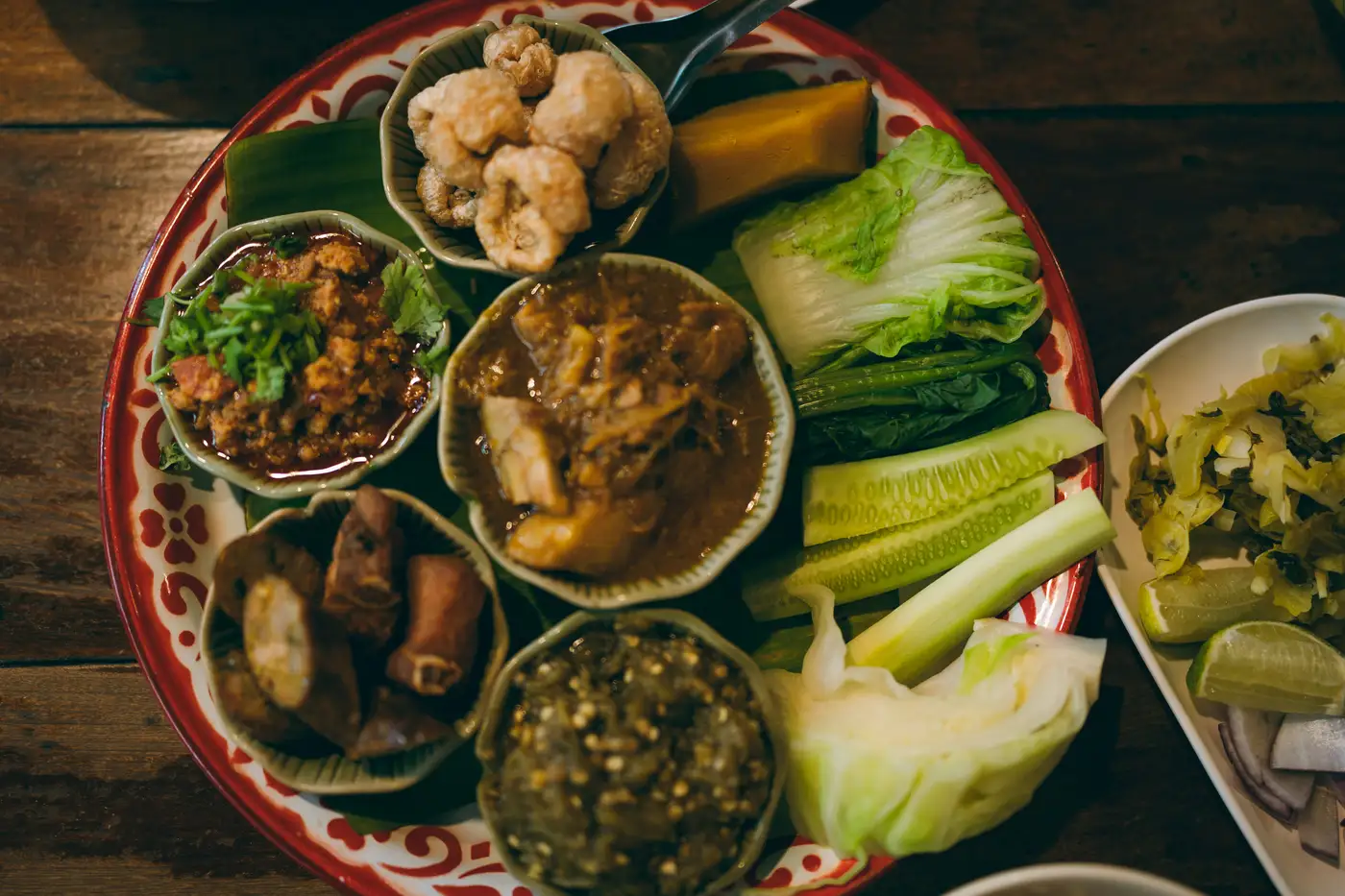
Phuket Thai food is southern Thailand's most layered regional cooking, a blend of Hokkien Chinese technique, Malay spice and local Thai ingredients that islanders call Baba or Peranakan food. It runs from fiery street noodles to gentle braised pork belly, and in 2015 it earned Phuket a UNESCO City of Gastronomy title. This guide covers the dishes, the places locals trust and what a plate costs. Updated November 2026.
The flavour here traces back to the 19th century. Chinese tin miners, most of them Hokkien speakers, settled in Phuket Town and married local Thai women. Their kitchens merged two cooking traditions over a few generations. Add Malay traders from the south and the Andaman coast's daily catch, and you get a cuisine found nowhere else in Thailand.
That mix has a name. Locals call it Baba, or Peranakan, food. It leans gentler than the chilli-heavy cooking of Bangkok or the Isan northeast. Star anise, cinnamon and turmeric do as much work as fresh chilli here. First-timers often find Phuket plates rounder and less punishing than they expected.
The island's cooking carries an official stamp. According to UNESCO (2015), Phuket joined the Creative Cities Network as a City of Gastronomy, the first city in Thailand to hold the title. Sixty-five local Baba chefs helped document the recipes that won the bid, from braised pork to herbal shaved-ice jellies.
"Phuket Baba food combines recipes from Royal Thai Cuisine, common Thai dishes, Hokkien Chinese food and Malay cuisine, which together create a unique blend of delicate flavors that are not too spicy, not too sweet and not too salty."
Dr Kosol Tang-Uthai, President of the Thai Peranakan Association, The Thaiger
Where does the Baba influence show up?
You taste it in the signatures. Moo hong is star-anise braised pork belly. Mee hoon gaeng poo is a southern crab curry over thin rice noodles. O-aew is a shaved-ice jelly dessert sold from Old Town carts. None of these appear on a standard Bangkok menu. To start wide before you sit down to a full meal, Explore the best street food phuket serves.
From Pad Thai to Massaman
From pad thai to massaman, Phuket serves both of Thailand's most famous dishes and the regional cooking behind them. Pad thai is a 1930s government invention, a stir-fried rice noodle found on every corner. Massaman is older and southern at heart, a mild Muslim-influenced curry of beef or chicken, potato and dried spice that CNN once crowned the most delicious food on earth.
Pad thai is younger than most visitors assume. It arrived in the 1930s, when Prime Minister Plaek Phibunsongkhram pushed noodles over rice to cut wartime rice use. The government handed out carts and recipes under a "Noodle is Your Lunch" campaign. The dish was engineered as a national symbol, and it stuck.
Massaman tells a much older story. Persian and Indian Muslim spice traders brought cardamom, cinnamon, cloves and cumin through the southern ports centuries ago. Those warm spices met Thai lemongrass and galangal, and a slow, sweet curry was born. The earliest written Thai recipe for it dates to 1889.
"A version of massaman curry was first introduced to Thailand by the spice traders coming over from India and as far away as Persia."
Saiphin Moore, chef and co-founder of Rosa's Thai, National Geographic
The recognition is real. According to CNN Travel (2011), massaman curry topped its ranking of the world's 50 most delicious foods, and it held the top spot in the updated 2018 list. For a curry rooted in the Muslim south, that is a fair claim to Thailand's finest.
"Massaman is a dish that doesn't usually depart from the normative version. Cooks don't usually mess with it."
Leela Punyaratabandhu, Thai cookbook author, National Geographic
Beyond the two headliners
The island's own dishes deserve as much attention. Hokkien mee is wok-fried yellow noodles with prawns, squid and pork, a direct link to the Chinese settlers. O-tao is a griddled mix of taro, seafood and egg, crisp at the edges. Both are street staples you will struggle to find outside the south.
A first-timer's tasting order
New to the island's kitchen? Work from mild to bold so your palate keeps up. This order suits a first full day of eating.
- Moo hong: star-anise braised pork belly, gentle and sweet.
- Massaman curry: warm dried spice, soft potato, almost no chilli heat.
- Pad thai: tamarind, egg and peanut on stir-fried noodles.
- Hokkien mee: wok-fried yellow noodles with prawns and pork.
- Mee hoon gaeng poo: the crab curry noodles that locals rank highest.
Want to cook these yourself? Discover a phuket cooking class and food tour and you can learn a massaman paste from scratch. A good phuket food tour will also walk you through Old Town's oldest stalls.
Best Pad Thai Phuket
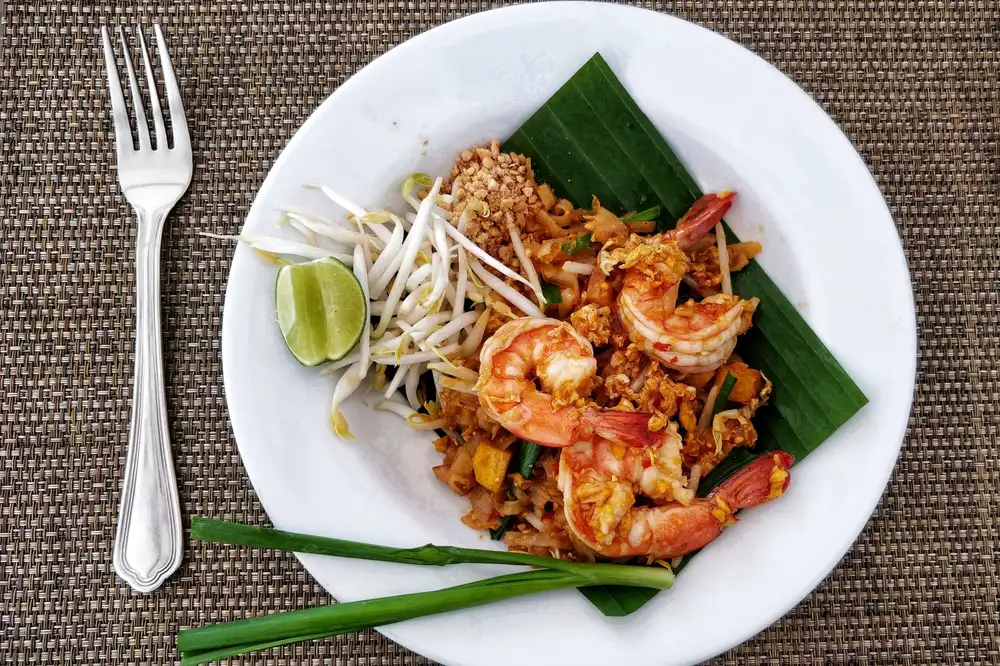
The best pad thai in Phuket comes from stalls and family shops, not hotel kitchens. Expect to pay 60 to 80 baht for a plate wrapped in egg or served with fresh prawns. Kopitiam by Wilai in Old Town and the long-running Pad Thai Shop in Karon are the two names locals send visitors to first, and both plate the real tamarind version.
Great pad thai is about balance, not size. Tamarind brings the sour, palm sugar the sweet, fish sauce the salt, then dried chilli to taste. A good cook finishes it fast over high heat so the noodles stay separate. At a street price of 60 to 80 baht, it is the cheapest lesson in Thai flavour you can buy.
We checked the Michelin Guide street food list on 2 November 2026 and it names Go La on Kra Road for Hokkien-style fried noodles, a close cousin of pad thai. If a queue of locals forms by noon, trust it. That is the single most reliable signal of a good noodle stall in Phuket.
Where do locals send you?
One Chun in Phuket Town is a Michelin Bib Gourmand favourite for Phuketian plates, with a budget of about 120 to 370 baht per person. Expect a weekend queue, since it takes no reservations. Its moo hong Phuket style runs 265 baht, a fair benchmark for the dish islandwide.
For southern Thai cooking in a grand old shophouse, Tu Kab Khao is the Old Town pick. We checked Tu Kab Khao's listing on 2 November 2026 and it prices the crab curry with rice vermicelli at 360 baht. Michelin inspectors flag that same curry as the dish not to miss.
Want a smarter plate with the same roots? Suay in Cherngtalay, from chef Tammasak "Noi" Chootong, has held a Michelin Plate for years running. It is where modern technique meets southern flavour, a short drive from the Bang Tao beaches.
Insider Tips from Locals
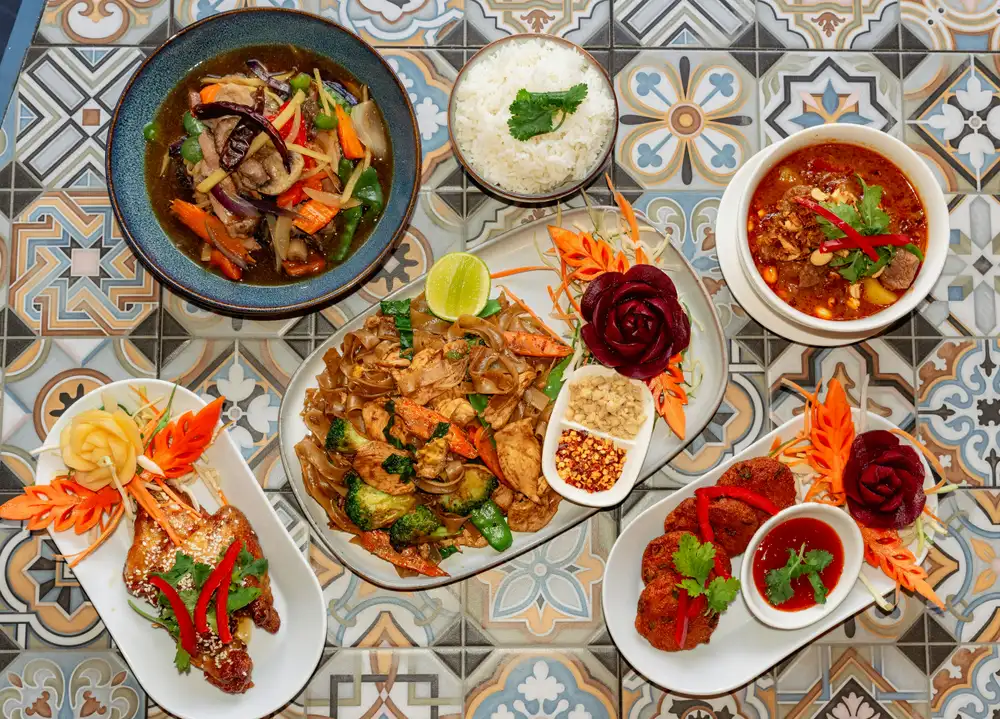
Locals eat where the menu is short and the turnover is fast. The best Phuket Thai food hides on side streets in Phuket Town, in the Rawai seafood hawker area and at morning markets, not on the beach road. A few simple habits get you the real version at the local price, and most of them cost nothing.
A short menu means a kitchen that cooks a few things well. A long laminated menu in six languages usually means a kitchen that freezes and reheats. Follow the motorbikes at lunch and the plastic stools after dark, and you will eat better for less.
- Go early for breakfast dishes. O-aew, dim sum and a Baba breakfast beat many a best brunch phuket spread, and the best stalls sell out before 9 am.
- Order moo hong once. It is the island's signature braise and the clearest taste of Peranakan cooking.
- Say "pet nit noi" for mild. Southern food can carry real heat; this phrase means only a little spicy.
- Carry cash. Most stalls and Old Town shophouses do not take cards.
- Eat crab curry noodles at least once. Mee hoon gaeng poo is the dish locals rank above all others.
- Pair food with a night out. Old Town's bars sit steps from the best shophouse kitchens.
Phuket is one of the safer nightlife islands in the region, so an after-dinner wander through Old Town is part of the fun. To turn dinner into an evening, see where locals drink after the kitchens close. For a full seafood night along the coast, Find the phuket seafood restaurants locals rate.
Practical Info and Costs
Phuket Thai food is some of the best value in Thailand. A street plate runs 60 to 120 baht, and a full meal at a local restaurant costs 150 to 250 baht per person, as of November 2026. Prices climb only on the beach road and in hotels, so eat one street over and keep more baht for the next plate.
The table below gives real street and hawker prices recorded in August 2026. Treat them as a guide. A plate can swing 10 to 20 baht by neighbourhood, and tourist zones such as Patong and the beach roads sit at the top of every range.
| Dish | Typical price (THB) | Where to find it |
|---|---|---|
| Pad thai | 60 to 80 | Hawker stalls, Rawai and Phuket Town |
| Khao man gai (chicken rice) | 60 to 75 | Morning markets, Old Town |
| Green or red curry with rice | 80 to 120 | Local Thai shops |
| Moo ping (3 pork skewers) | 30 to 50 | Street carts islandwide |
| Som tum (papaya salad) | 50 to 80 | Markets and hawker areas |
| Moo hong Phuket style | 265 | One Chun, Phuket Town |
| Crab curry with rice noodles | 360 | Tu Kab Khao, Old Town |
| Iced Thai tea | 25 to 50 | Carts and cafes |
How much should you budget a day?
Two street meals and a drink come to roughly 200 to 300 baht per person. A sit-down dinner at a Bib Gourmand spot such as One Chun lands near 300 to 400 baht. Even with a splurge, Phuket eating stays cheaper than most beach destinations in the region.
For a special night, Blue Elephant plates royal Thai food in a restored Sino-Portuguese mansion on Krabi Road. The same kitchen holds a single-restaurant Blue Elephant entry in the Michelin Guide. Book it for one evening and keep the street stalls for everything else. Getting between Old Town and the beaches is easy once you read our Phuket transport guide.