

What Is Surfing in Phuket?
Surfing Phuket is riding the monsoon swell that rolls onto the island's west-coast beaches between May and October, when the southwest monsoon pushes Andaman Sea waves onto sand breaks like Kata, Kalim and Nai Harn. Surfing Phuket suits complete beginners on the gentle Kata shorebreak, and it holds bigger, faster waves at the Kalim reef for experienced surfers. Lessons, board rental and repair sit steps from the water.
Thailand is not the reef-perfect setup of Bali or the Mentawais, and that honesty matters before you book a flight. This is a seasonal, monsoon-fed coast. For roughly half the year the west coast lies flat. For the other half it becomes one of Southeast Asia's friendliest places to learn.
The island sits on the Andaman Sea, so every surf beach faces west. When the southwest monsoon blows in from May, it stacks up wind swell that breaks close to shore. According to the Tourism Authority of Thailand, the surf season at Kata Beach runs from May to October, and that window holds for the whole coast.
When we visited Kata in peak season, the water was busy with foam-top rental boards and first-timers standing up inside a single lesson. That is the real character of surfing Phuket: shallow, warm, forgiving on the inside, with enough punch on the outer reefs to keep locals coming back.
Warm water is the quiet advantage here. The sea sits near 29C all season. There is no wetsuit and no cold-shock. A nervous beginner can spend two hours falling off a board without noticing the time. That low barrier is why so many people try surfing Phuket for the first time on holiday and leave hooked.
Why the west coast? The Andaman Sea sits open to the southwest. The monsoon wind has room to build swell before it reaches the shore. The east coast, facing the calmer Gulf side, barely gets a ripple. That is why every named surf beach lines up along the same western edge, from Nai Yang in the north to Nai Harn in the south.
One more expectation to set. This is not a year-round wave machine. The pros who pass through in July are chasing the same monsoon energy that keeps beginners honest in June. Plan around the season and the coast delivers. Ignore it and you find flat, glassy water and no waves at all.

Where to Go Surfing Phuket: Best Beaches by Level
Kata Beach is the best all-round place to start, with a mellow beach break and a dozen surf schools on the sand. Kalim, just north of Patong, and Nai Harn at the island's south hold the bigger, faster waves for experienced surfers. Surin, Kamala and Nai Yang round out the choices when the main breaks get crowded.
Every surf beach on the island faces the same swell, but the sea floor changes the wave. Sand breaks like Kata forgive a bad wipeout. Reef breaks like Kalim do not. Matching the beach to your level is the first real skill of surfing Phuket, and it is the difference between a good day and a scary one.
Kata Beach: The Beginner Surf Beach
Kata splits into two bays, the long Kata Yai and the smaller, quieter Kata Noi. Kata Yai is the heart of surfing Phuket: a sand break that handles south and southwest swell and rarely turns nasty on the inside. Waves sit around chest to head high in the peak months of July and August.
The official Thai government tourism page calls Kata "an ideal place for amateur surfers as the beach is full of surf schools." We found the north end noticeably quieter than the packed middle. The south corner is where a rip tends to form, so read the flags before you paddle out. Kata is also the only west-coast surf beach with a full-time lifeguard tower.
Kata Noi deserves its own mention. The smaller bay sits over the headland from Kata Yai and stays more sheltered. On a mid-size swell it offers a softer wave and far fewer people. It is a good bolt-hole when Kata Yai turns into a washing machine of rental boards.
Kalim Reef and Nai Harn for Experienced Surfers
Kalim Beach, at the northern tip of Patong, is the island's most serious wave. It breaks over rock and reef, not sand, so it runs faster, hollower and less forgiving of mistakes. Local surfers rate it the best barrel in Phuket when a big swell lands. Leave it to intermediate and advanced riders.
Nai Harn, at the southern end, is a punchy beach break that can double in size on the sets and draws the local shortboard crew. Our Nai Harn beach guide covers the swimming, viewpoints and food around the bay for the hours you are not in the water.
Surin, Kamala and Nai Yang Surf Breaks
Surin picks up the same swell as Kata but with a steeper drop onto the sand. Kamala, especially its northern end, throws slower, longer walls that longboarders love. Nai Yang, up near the airport, breaks over a distant reef and stays calmer, which makes it a soft option for improvers.
Karon, the long beach between Kata and Patong, picks up size fast. It has lifeguards but a reputation for strong rips. It is not a beginner's first choice. Treat Karon as an intermediate step once your paddling is solid.
Kata gets the crowds, so these three spread the pack out on a busy swell. Read our Kamala Beach guide before you head north, since parking and beach access shift through the year.
Access is easy at all of them. Each beach has parking, cheap food and at least one board rental within a short walk of the sand. Kata simply has the most, which is why first-timers gravitate there.
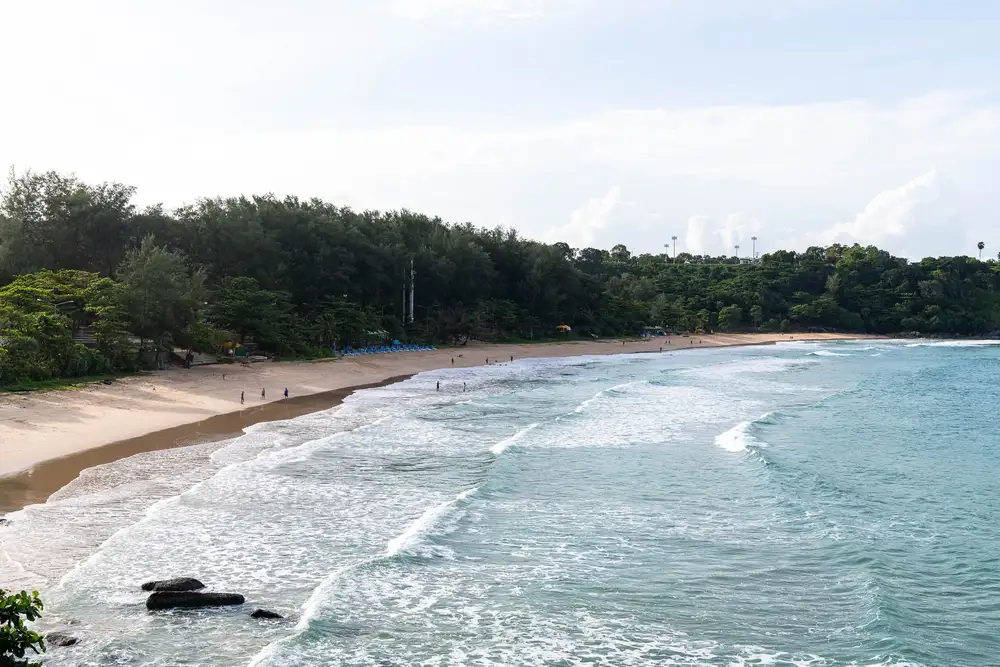
When Is Surf Season, and How Do Lessons Work?
The surf season runs May to October, when the southwest monsoon feeds the Andaman coast. May, June, September and October usually offer the cleanest waves, while July and August bring the biggest and most consistent swell. A two-hour beginner lesson costs about 1,500 THB and includes the board, so most people start with an instructor rather than a bare rental.
Phuket Surf Season Month by Month
Saltwater Dreaming, a Phuket surf school running since 2000, puts the surfing Phuket season plainly: the best months "are often at the beginning and end of the season, especially May, June, September and October," while November to March stays "mostly small or flat." That mid-year lull is why the high tourist season and the surf season barely overlap.
- May to June: smaller, cleaner waves, warm water and thinner crowds. The friendliest window to learn.
- July to August: the biggest, most consistent swell and the strongest rip currents. Ideal for improvers, risky for absolute beginners.
- September to October: a second sweet spot as the monsoon eases, often glassy in the early mornings.
- November to April: mostly flat. Time to swap the surfboard for other water sports.
How Much Do Surf Lessons in Phuket Cost?
Prices are refreshingly standard across the Kata schools, which makes surfing Phuket approachable even on a budget. Phuket Surf, offering lessons since 1999, starts private lessons at 1,500 THB for 90 minutes and kids' lessons at 600 THB. Phuket Surfing lists a one-hour private lesson at 1,000 THB and two hours at 1,800 THB, with free board use after the lesson. As of September 2026, a rental board runs from about 200 THB a day.
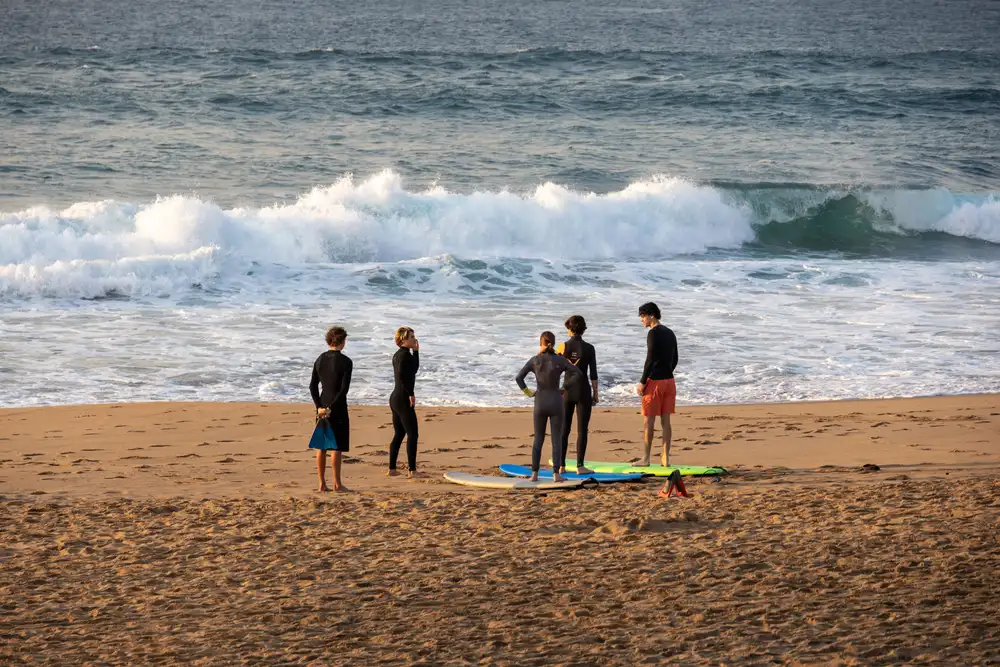
A standard beginner lesson runs 90 minutes to two hours. It starts on the sand with a safety briefing and a pop-up drill. Then it moves into the whitewater, with an instructor pushing you into waves. Soft-top boards, a rash vest and a photo set are usually included. Ask before you pay.
Choosing a Surf School and Board Rental
In our experience, the school matters less than the instructor. Ask who will actually be in the water with you. Saltwater Dreaming runs multi-day camps from 6,500 THB for people who want to progress past the pop-up. We recommend booking the first lesson in the morning, when the wind is lightest and the beach is quietest.
Private lessons cost more but progress you faster, since the coach watches only you. Group lessons are cheaper and more social, with two students to one instructor. For a single holiday session, private wins. For a week of learning, a multi-day camp is the better value.
Contests are not new here. Quiksilver first ran a surf contest at Kata in 1999, and the Kamala Go Surfing Club has held an annual event since 2005, according to Saltwater Dreaming. Time a trip for a mid-season contest weekend and you can watch the island's best surfers work the same beach you learned on.
Booking is easy either way. You can reserve online in advance or simply walk the Kata sand and pick a school on the spot. Walk-up works fine in the shoulder months. In peak July and August, a quick message ahead secures your slot and your board size.
Kata takes the sport seriously enough to host contests. According to the Thailand Surfing Federation, the Phuket Beach Festival drew 110 surfers from across Southeast Asia to Kata Beach for its 2022 international competition. Head judge Mark Clift summed up the local attitude to the water:
"It's our job to be fair and do our best. Go with your own instinct, have your own opinion, and be confident in your ability."Mark Clift, Head Judge, Phuket Beach Festival surfing competition (Thailand Surfing Federation, 2022)
Explore Phuket's best beach clubs for a sundowner after your session, since many sit on the same west-coast sand as the surf breaks.
Insider Tips from Phuket Locals
Practical Info and Costs
Expect to spend around 1,000 to 1,500 THB for a beginner surf lesson, 200 to 800 THB a day for a rental board, and nothing at all to surf a beach you can already handle. Getting to the west-coast breaks is cheap by scooter and pricier by taxi. Here is what surfing Phuket actually costs, updated for September 2026.
Comparing Surf Costs Across Phuket
These are the standard rates published by the Kata surf schools as of September 2026. Multi-day camps work out cheaper per session than one-off lessons.
| Item | Typical price (THB) | Notes |
|---|---|---|
| Private lesson (90 min) | 1,500 | Board and instructor included, per Phuket Surf |
| Private lesson (1 hr) | 1,000 | Per Phuket Surfing |
| Group lesson (2 hr) | 1,800 | Two students, one instructor |
| Kids' lesson (1 hr) | 600 | Ages 6 to 12, per Phuket Surf |
| Board rental (1 day) | 200 to 800 | Depends on board type |
| Multi-day camp | from 6,500 | Per Saltwater Dreaming |
| FlowRider hour | from 1,000 | Artificial wave, flat-day option |
Getting to Phuket's Surf Beaches
Kata sits about 45 minutes south of the airport. A metered taxi or Grab from Patong to Kata runs roughly 300 to 500 THB, while a rented scooter is the cheapest and most flexible way to chase the swell between beaches. Our scooter rental guide covers licences, insurance and the police-check spots before you ride, which matters when you are planning a surfing Phuket trip on a budget.
Timing your day matters as much as timing your season. Dawn and the hour after are usually the cleanest, before the sea breeze chops up the surface. By mid-afternoon the wind often turns the waves messy. Early starts are worth the alarm.
What Surf Gear Do You Need?
Almost nothing. The water sits near 29C, so leave the wetsuit at home and bring boardshorts or a rash vest against the sun. Reef booties help at Kalim. For a flat day, Surf House Phuket runs a FlowRider artificial wave at Patong, and its Kata sister venue posts sessions on Instagram, so you can drill the pop-up even in the dry season.
If you are travelling with your own board, most Kata schools will store it between sessions for a small fee. That saves lugging a 7-foot funboard on a scooter. For everyone else, renting on the day keeps things simple and cheap.
Surfing Phuket rewards people who show up in the right months and respect the water. Get the season right, pick a beach that matches your level, and book a lesson with an instructor who will stay beside you in the whitewater.
See what a Coral Island day trip adds to a surf week, and open the EVE app to find live beach conditions, surf schools and events across Phuket.