

What is Wat Chalong Phuket?
Wat Chalong Phuket is the island's largest, most sacred, and most-visited Buddhist temple, a living place of worship that has stood at the spiritual heart of Phuket for nearly 190 years. Officially named Wat Chaiyathararam (วัดไชยธาราราม), the temple sits in the Chalong subdistrict about 8 kilometres south of Phuket Town. Of the island's 29 active Buddhist temples, Wat Chalong draws the most visitors and holds the deepest cultural significance. Entry is free, and the temple opens daily at 7 am. Updated June 2026.
A Temple Born from a Mining Town
The temple was established around 1837 as a modest village monastery in what was then a rural farming and tin-mining community. Its founding monks, Luang Pho Chaem and Luang Pho Chuang, earned a reputation far beyond the temple walls for their mastery of traditional herbal medicine. Sick and injured villagers travelled considerable distances to be treated at Wat Chalong Phuket.
The temple's defining moment came in 1876, during the Chinese Coolie Rebellion, known in Thai as the Ang Yi uprising. Thousands of Chinese tin miners, organised in secret fraternal societies, rose against the ruling class. Luang Pho Chaem sheltered refugees within the temple grounds, tended to the wounded with herbal remedies, and distributed blessed white fabric headbands (pha prachiat) to resistance fighters as spiritual protection. His leadership during the crisis earned him a royal audience.
King Rama V subsequently honoured Luang Pho Chaem with the royal title Phra Kry Wisit Wongsacharn and granted the temple its formal royal name, Wat Chaiyathararam, which translates as "Temple of Auspicious Waters." A third revered monk, Luang Pho Gluem, later added his own legacy to the complex. Today all three are honoured in wax effigy inside the main prayer hall, where devotees continuously apply gold leaf as an act of worship.
"Of Phuket's 29 Buddhist temples, Wat Chalong is the most important, not merely for its size, but for the way it ties the island's history, its people, and its faith together."
, Bangkok Airways Travel Blog
As of June 2026, Wat Chalong Phuket continues as a fully active centre of Theravada Buddhist worship. According to the Tourism Authority of Thailand (TAT), Phuket receives over 13 million international visitors per year (per TAT 2024 annual figures), and Wat Chalong consistently ranks among the top three cultural sites on the island. When we visited on a quiet Tuesday morning in early 2026, the contrast with the busy beach areas was striking, incense drifting across sun-warmed stone, monks in saffron robes moving between the halls, and the sudden crackle of firecrackers from the merit-making shelter.
Temple Visit Guide
Wat Chalong Phuket is a substantial complex that rewards time and attention. Allow at least 60 to 90 minutes, and up to two hours if you plan to climb the Grand Chedi. Here is what to see, in order of significance.
What Are the Most Sacred Spots Inside Wat Chalong Phuket?
The Phra Mahathat Chedi, the Grand Pagoda
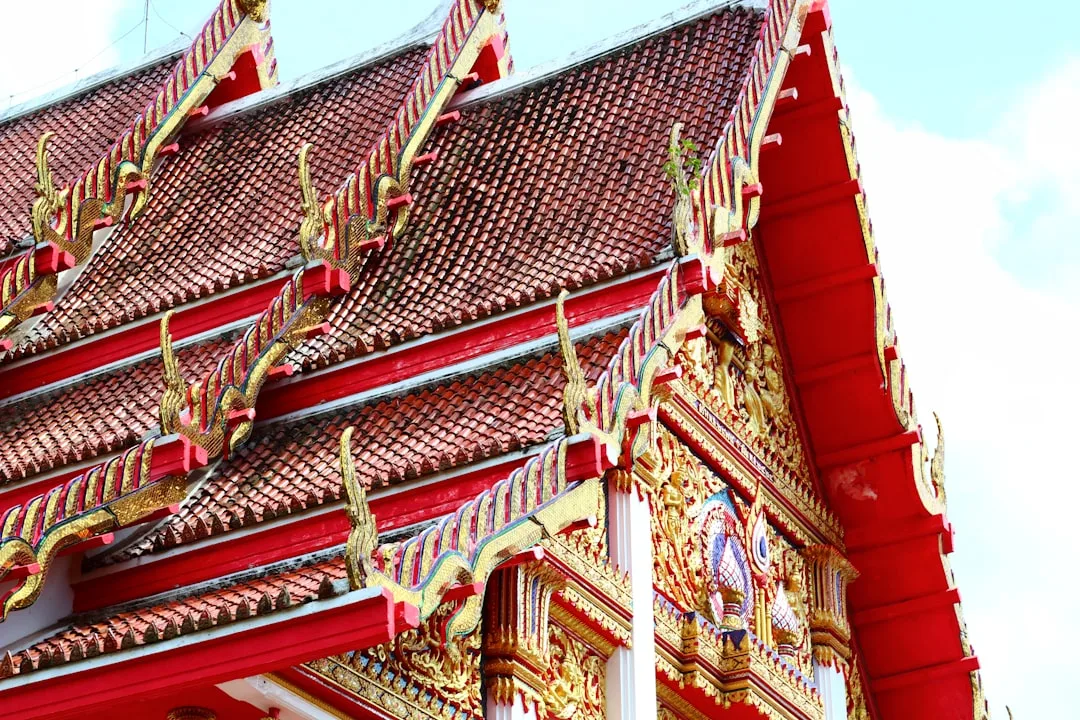
The dominant landmark at Wat Chalong Phuket is the Phra Mahathat Chedi, a 60-metre, three-level golden pagoda built between 1991 and 2001. Its gilded exterior is decorated with intricate Thai carvings and hundreds of gold-leaf panels that catch the morning sun brilliantly. This is not a ruin or a historic monument; it is a functioning religious building open to visitors willing to climb to the top.
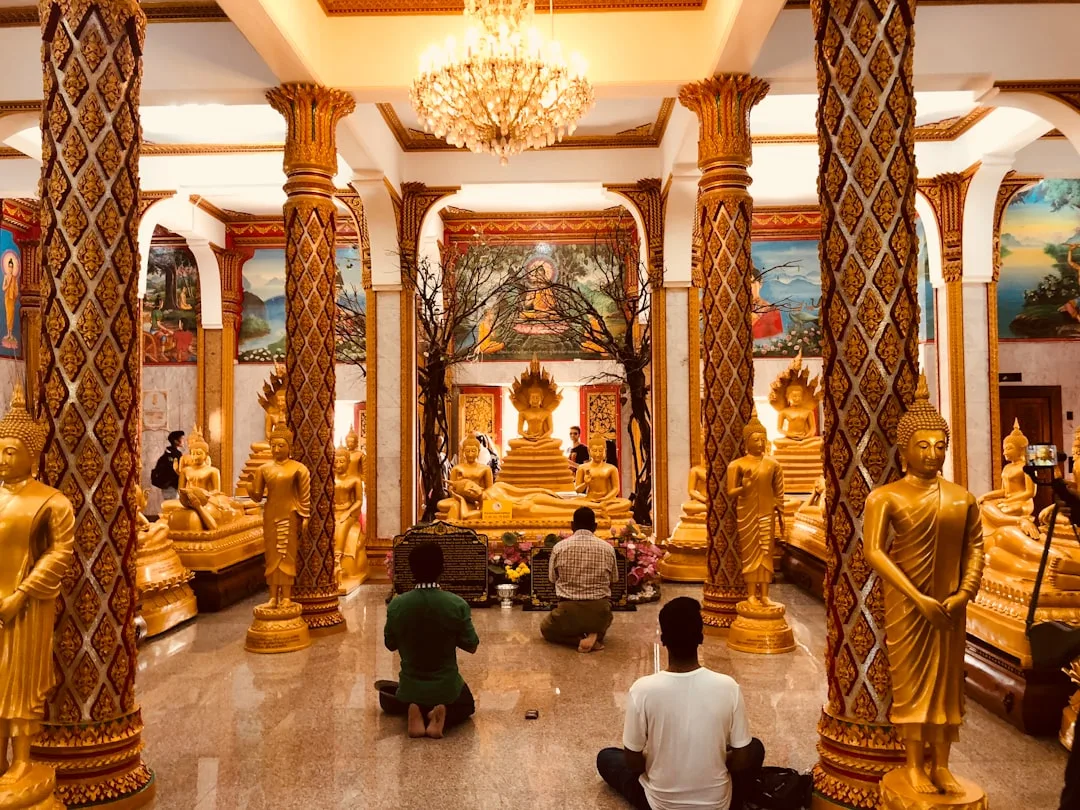
The first two floors house Buddha statues in seven distinct postures, each representing a period of the Buddha's daily life. The painted murals encircling the walls depict episodes from the Jataka tales, stories of the Buddha's previous lives, and from the life of Siddhartha Gautama himself. The artistry is genuinely extraordinary: vivid pigments against a gold ground, executed with the same care as murals in Bangkok's royal temples but encountered by far fewer foreign visitors.
The uppermost level is the most sacred. At the centre sits a glass reliquary housing a bone fragment believed to come from the historical Buddha. Per temple records, Sri Lanka gifted this relic to King Rama IX in 1999 to mark his 72nd birthday; the King subsequently had it enshrined at Wat Chalong. In our experience, many visitors reach the top and are visibly moved, there is something profoundly still about the space, even on busy days.
The Main Prayer Halls (Viharn)
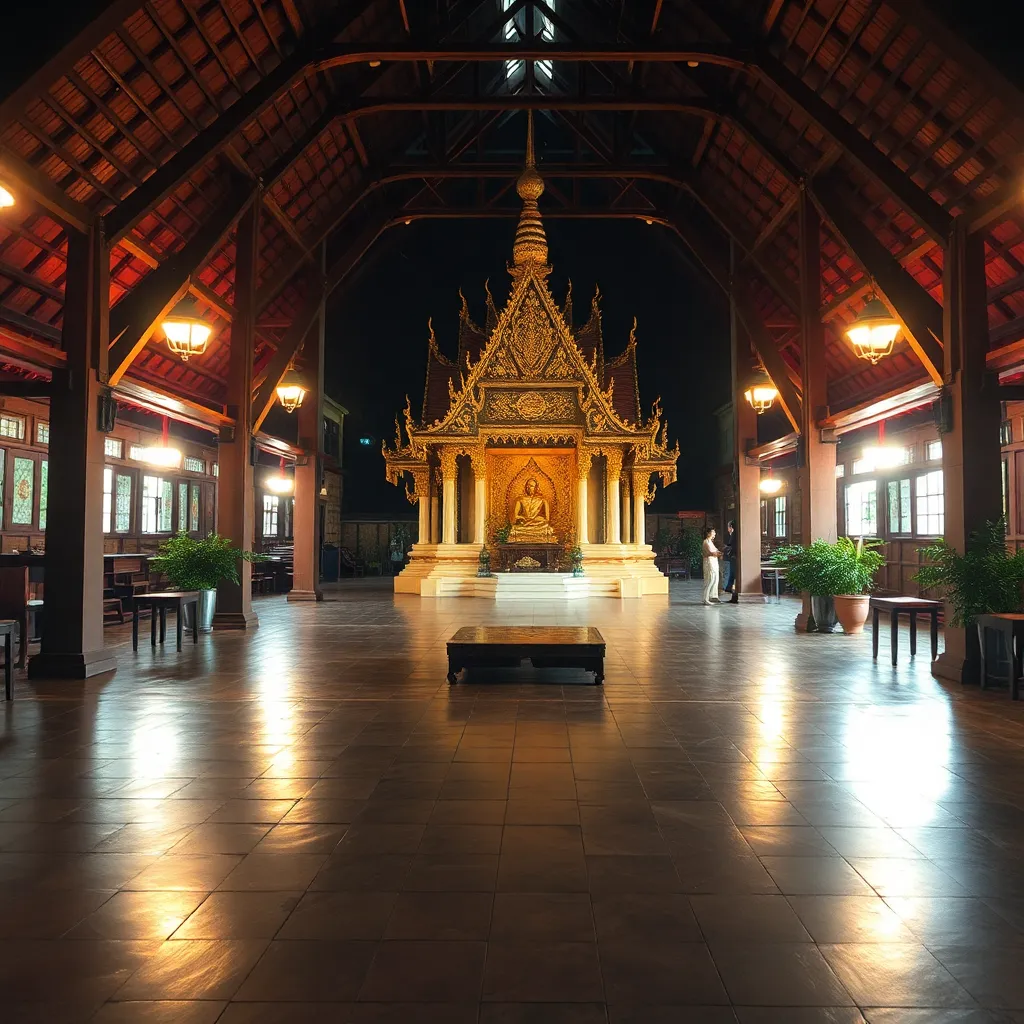
The older prayer halls, which predate the Grand Chedi by decades, are where the temple's emotional core resides. Inside the main viharn, three life-sized wax statues of Luang Pho Chaem, Luang Pho Chuang, and Luang Pho Gluem sit in saffron robes on gilded thrones. Devout visitors apply gold leaf to the statues continuously as a form of merit-making; over the years the monks have acquired an extraordinary, glittering patina of accumulated devotion. Donation boxes placed in front of each statue support ongoing temple maintenance.
The Firecracker Merit-Making Ceremony
One of Wat Chalong Phuket's most distinctive rituals unfolds throughout the day in a dedicated brick shelter near the main hall. Worshippers who have had a prayer answered return to give thanks by lighting strings of firecrackers, the noise is sudden and startling, the air filling with paper debris and a sharp sulfurous smell. This is not theatre for tourists. It is a living religious practice that has continued here since the 19th century, and one of the most authentic cultural experiences available anywhere on the island.
The Grounds and Smaller Shrines
The outer grounds hold a network of smaller shrines, spirit houses, and prayer stations. Chinese-style guardian statues flank several of the entrances, reflecting the Hokkien cultural layer that has shaped southern Thai Buddhism for centuries. Merit-making supplies, incense sticks, lotus flowers, candles, gold leaf squares, are sold at perimeter stalls at fair prices. Participating in merit-making connects you to the temple's living purpose in a way that observation alone does not.
Phuket Temples
Wat Chalong Phuket is the most famous of the island's 29 active Buddhist temples, but it is just the starting point for anyone wanting to understand Phuket's spiritual landscape. The island has an extraordinary concentration of temples for its size, from nationally significant royal complexes to quietly local neighbourhood wats visited almost exclusively by Thai worshippers.
How Does Wat Chalong Compare to Other Phuket Temples?
| Temple | Location | Key Feature | Entry Fee | Distance from Wat Chalong |
|---|---|---|---|---|
| Wat Chalong (Wat Chaiyathararam) | Chalong, southern Phuket | 60 m Grand Chedi with Buddha bone relic; firecracker merit-making; active worship since 1837 | Free | , |
| Big Buddha Phuket | Nakkerd Hill, Chalong/Karon border | 45 m white Burmese marble Mingmongkol Buddha; panoramic Andaman views | Free | ~8 km |
| Wat Phra Thong | Thalang, northern Phuket | Half-buried golden Buddha (only head and shoulders above ground) | Free | ~25 km |
| Wat Srisoonthorn | Thalang, northern Phuket | 29 m golden reclining Buddha in Pang Sai Yat (Nirvana) posture | Free | ~25 km |
| Wat Kanan | Thalang, northern Phuket | All-white architecture, Phuket's answer to Chiang Rai's White Temple | Free | ~28 km |
| Wat Phra Nang Sang | Thalang, near Heroines Monument | Phuket's oldest temple (~200 years); Chinese-Thai architectural blend | Free | ~27 km |
All distances are approximate by road from 70 Moo 6, Chaofa Road, Chalong, as of June 2026.
Combining Wat Chalong with Big Buddha Phuket
The most popular temple day circuit pairs Wat Chalong Phuket with the Big Buddha Phuket on Nakkerd Hill, approximately 8 kilometres north. The Big Buddha, formally Phra Phuttha Ming Mongkhon Akenakkiri, is a 45-metre white Burmese marble statue funded entirely by donations and still being embellished. The hilltop views across Chalong Bay, Kata Beach, and Karon Beach are exceptional, and on clear days Racha Yai Island is visible on the horizon.
We recommend arriving at Wat Chalong by 8:30 am (cooler, quieter, better light), spending 60–90 minutes in the complex, then driving to Big Buddha for mid-morning before tour buses begin arriving around 11 am. The entire circuit, including driving time and a coffee stop in Chalong town, fits comfortably into a half-day. See our detailed Big Buddha Phuket guide for full visit information, dress code reminders, and parking tips.
The Northern Temple Circuit
For a full day of cultural exploration, Phuket's northern temples offer a rewarding counterpoint to the south. The Thalang area, accessible via Route 402 near the Heroines Monument, clusters three significant temples within a few kilometres of each other. Wat Phra Nang Sang is reputedly the oldest temple on the island at over 200 years, with a distinctive architectural blend of central Thai, southern Thai, and Chinese influences. Wat Phra Thong is famous for its half-buried golden Buddha, visible from the main road; legend holds that anyone who attempts to excavate the statue will be struck by misfortune. Wat Kanan, a newer temple, has drawn attention for its all-white architecture, far fewer visitors than Wat Chalong, and an atmosphere that feels genuinely local as a result.
Insider Tips from Locals
After covering Phuket's cultural scene since 2019, here are the practical tips that make the difference between a rushed tourist stop and a genuinely memorable visit to Wat Chalong Phuket.
When Should You Visit Wat Chalong Phuket?
- Arrive before 9 am. The temple opens at 7 am. The early morning light on the golden Phra Mahathat Chedi is extraordinary, warm, low, and dramatic. Tour buses from Patong and Karon start arriving around 10:30 am and the atmosphere changes noticeably. A 7:30 am arrival gives you at least 90 minutes of relative quiet.
- Dress prepared, not last-minute. Shoulders and knees must be covered to enter any of the temple buildings. The complex sometimes has sarongs available at the entrance, but in our experience they are not always in supply and can feel uncomfortably hot in Phuket's heat. A lightweight linen shirt and loose trousers weigh almost nothing and solve the problem reliably.
- Climb all three floors of the Chedi. A surprising number of visitors photograph the exterior of the Phra Mahathat Chedi and do not go inside. The interior is the entire point: the painted murals are extraordinary in their detail, and the glass reliquary containing the Buddha bone fragment at the top is the most sacred object on the entire site. Allow 20–25 minutes just for the Chedi climb.
- Stay for a firecracker ceremony. The merit-making ritual happens throughout the day, unscheduled and spontaneous. When you hear it starting, step back, it is loud and the paper casings scatter. It is also one of the most authentic religious moments available anywhere in Phuket.
- Visit on a weekday if possible. Thai public holidays and weekends draw large crowds of local Buddhist worshippers, wonderful to observe, but the atmosphere shifts. Tuesday and Wednesday mornings are consistently the quietest in our experience.
- Bring small denomination Thai baht for merit-making. Gold leaf squares near the main hall cost 10–20 THB. Incense bundles are 10 THB. Participating, applying gold leaf, lighting incense, bowing before the monks, connects you to the temple's living purpose in a way observation alone does not.
- Combine with Phuket Old Town. Wat Chalong Phuket sits about 8 km from the historic centre. After the temple, Phuket Old Town's Sino-Portuguese walking streets are an ideal pairing, pastel shophouse facades, third-wave coffee, and Peranakan street food. One of the island's best cultural half-days.
- Plan around the Vegetarian Festival. During the Phuket Vegetarian Festival (October–November), Wat Chalong transforms. White-robed devotees fill the grounds, ceremonial processions pass through the complex, and the ritual energy is unlike anything else on the island. This nine-day event is worth planning an entire trip around.
Practical Info & Costs
Everything you need to plan your visit to Wat Chalong Phuket. All information verified as of June 2026, per the official Wat Chalong website.
| Detail | Information |
|---|---|
| Official name | Wat Chaiyathararam (วัดไชยธาราราม) |
| Address | 70 Moo 6, Chaofa Road (West), Chalong, Phuket 83000 |
| Opening hours | 7:00 am – 5:00 pm daily (grounds accessible at all hours) |
| Entry fee | Free. Donations welcomed. |
| Dress code | Cover shoulders and knees; remove shoes at all buildings |
| Recommended visit duration | 60–90 minutes; up to 2 hours including full Chedi climb |
| Best time of day | 7:00 am – 9:30 am on weekdays |
| Distance from Patong Beach | ~18 km (30–40 min by car) |
| Distance from Phuket Town | ~8 km (15–20 min by car) |
| Distance from Karon Beach | ~10 km (15–20 min by car) |
| Distance from Big Buddha | ~8 km (15 min by car) |
| Parking | Free on-site |
| Phone | +66 76 381 226 |
How to Get to Wat Chalong Phuket
Wat Chalong Phuket has no direct public bus route. Practical transport options:
- Grab or Bolt app: Most convenient option from anywhere on the island. From Patong: 100–150 THB. From Phuket Town: 60–80 THB. From Karon or Kata: 50–70 THB. Fares as of June 2026 per standard app pricing. See our Phuket transport guide for full island transit options.
- Scooter rental: Gives the flexibility to loop Wat Chalong, Big Buddha, and Promthep Cape in a single day. Rental: 200–350 THB per day from most beach areas. Ensure you carry an appropriate motorcycle licence.
- Taxi or tuk-tuk: Available in Chalong town and near Chalong Pier. Negotiate before departure; expect 200–350 THB one-way from beach areas.
What to Bring
- Clothing covering shoulders and knees (or a lightweight sarong)
- Easy slip-on shoes, removed at every building entrance
- Small denomination Thai baht: 20–50 THB is typical for merit-making offerings
- A bottle of water, there is little shade in the compound at midday
For broader itinerary planning, our guide to things to do in Phuket covers 40+ verified activities island-wide. And for pairing a cultural morning at Wat Chalong with an afternoon on the coast, see our guide to the best beaches in Phuket, Rawai Beach and Nai Harn are both within 10 km of the temple and among the quietest on the island.